Brazilian lawmaker waves model foetus as MPs vote to ban all abortions - even for rape victims
"To defend abortion... is a Satanic, diabolical and destructive act," congressman Pastor Eurico told the voting committee.
Thursday 9 November 2017 18:11, UK
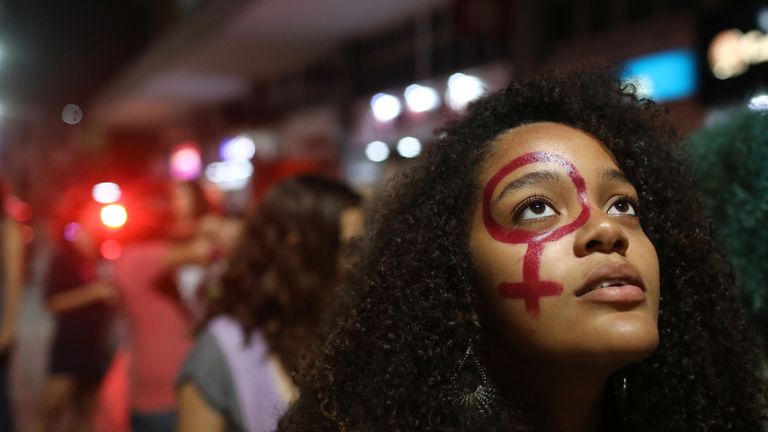
A special committee in Brazil has voted to ban all abortions, including in cases where the mother's life is in danger or the pregnancy is the result of rape.
One congressman brandished a replica of a 12-week old foetus as the ban was approved by the committee 18-1.
The committee was led by Evangelical Christians who are opposed to abortion in all scenarios.
"To defend abortion, like it or not, is a Satanic, diabolical and destructive act," congressman Pastor Eurico told the committee.
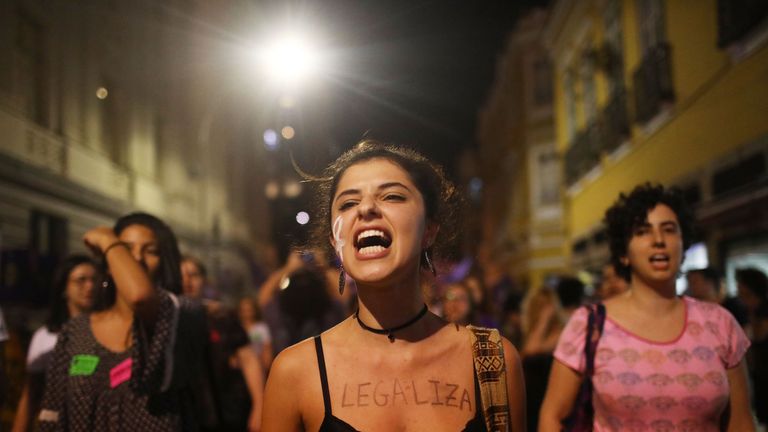
The sole vote against came from congresswoman Erika Kokay of the Workers Party, who was the only woman present.
She said the move was a manoeuvre by the committee's pro-life Evangelical Christian majority.
The vote was taken by a special committee considering an amendment to Brazil's constitution to extend maternity leave for mothers of premature babies.



It will have to achieve two-thirds support in both the upper and lower houses of Brazil's congress to become law.
Campaigners fear it could achieve the required number of votes as the governing coalition seeks trade-offs for other legislation it is seeking to pass.
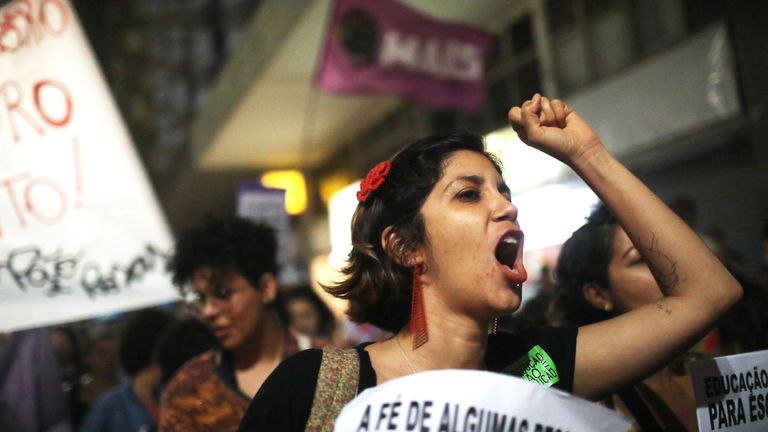
Abortion in Brazil is currently illegal and women who have one can be jailed for up to three years.
Exceptions are currently made if the mother's life is in danger or the pregnancy is the result of rape, but these have come under fire from a growing Evangelical representation in congress.
In 2012, the supreme court voted to also allow abortion in cases of anencephaly - a condition where the developing embryo lacks a large portion of the brain, skull and scalp.
In the majority of cases the infant is unlikely to survive for more than a few hours or days after birth.
Despite the rules on abortion the government estimates a million are carried out in secret clinics every year in Brazil.
The underground measures are thought to lead to thousands of women ending up in hospital as a result of botched procedures.