Europe's migration triage has left a hangover that requires urgent reform in two key areas
The EU's failure to address the flow in 2015 shifted politics in several key countries and led to consequences, says Mark Stone.

Tuesday 26 June 2018 15:21, UK
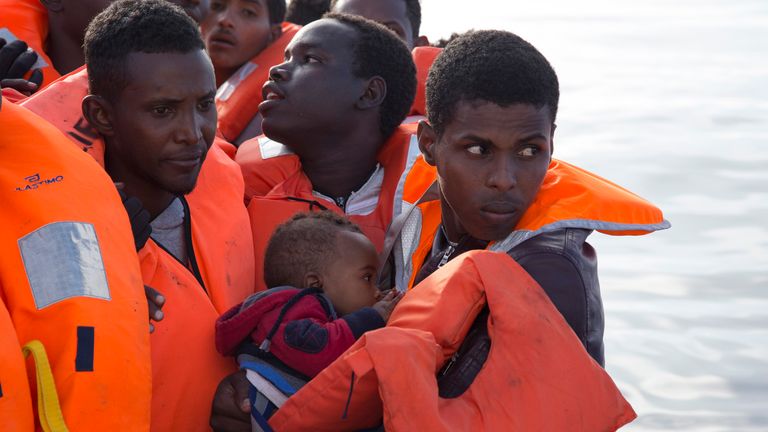
There are many turbulent forces at work across Europe at the moment creating a real sense of uncertainty.
Sunday's emergency one-day migration mini-summit was initially proposed for just a handful of countries but sixteen nations felt compelled to attend in the end.
The Bulgarian leader was reportedly more interested in the football and dipped in and out of the talks - but for most this was a key meeting.
There is, of course a paradox to this 'crisis'.
As one Brussels-based migration analyst told me, the EU seems to be experiencing its migration hangover at the moment.
The current situation in terms of migrant arrivals is not actually that bad; it's certainly well down on the 2015 peak.
However the EU's failure to address the flow back then shifted politics in several key countries, which is now having consequences.


The numerous 'crunch' migration summits in 2015 were, on reflection, only about triage. They didn't address the problems or find solutions.
:: EU leaders hold 'frank and open' talks at emergency migration summit
Europe's migration policy doesn't work - the asylum burden remains on frontier countries like Italy and Greece to take the strain.
And the returns policy doesn't work - failed asylum seekers (economic migrants) are not being returned home - either because their home country won't take them or because the EU country they are in fails to deport them; often it's both.
So they are left to live in an unpleasant illegal limbo.
I am in touch with a number of people who I met through the years as I've reported on migration.
They have repeatedly been rejected for asylum and yet they are still here, trying again.

The 'populist' and anti-establishment governments who secured power because of the 2015 failures have now politicised the issue and are forcing fundamental change.
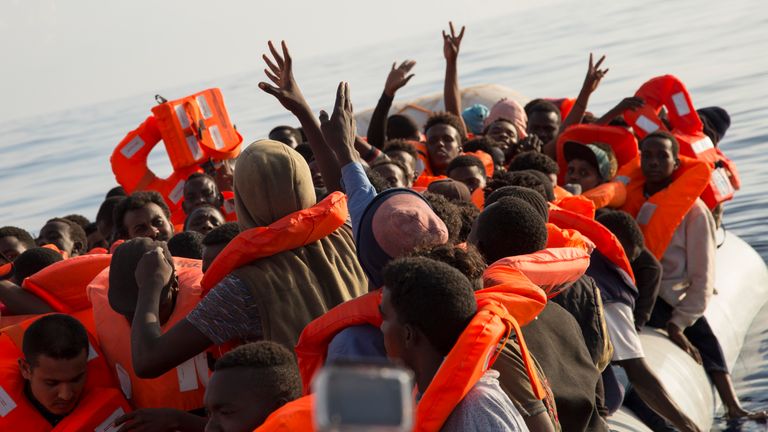
The paradox being that while the optics are of boatloads still arriving, the figures show that arrivals are a fraction of the number they were.
This has caused ructions all over the place:

:: Germany
Angela Merkel's hardline interior minister has a gun to her head. He's forcing her to deliver some very un-Merkel-like anti-migrant measures in a matter of weeks.
He wants her to close Germany's borders to all irregular migrants. It's domestic politicking - there is just a trickle of migrants arriving over Germany's Bavarian border these days - but it could cost her her job.

:: The Italian 'populists'
France and Italy have been lobbing insults at each other over the migrant issue. It's extremely unusual for two such central players in the EU to be at loggerheads.
It's a useful demonstration of how the Italian 'populists' roll and it's playbook-Trump stuff.
The two men who call the shots in Rome - Matteo Salvini and Luigi Di Miao, the figureheads of the two coalition parties and both now deputy prime ministers - used their vast social media presence to appeal to their support base by denouncing the what they termed the arrogance of the French president (who had dared to suggest that the migration crisis was largely a political row rather than an actual crisis).
An aside: Emmanuel Macron cast himself as anti-establishment when he won the presidency just over a year ago (was it only a year ago!?). Now he feels firmly establishment and up against the real mavericks in Italy.
:: The migrants on the Med
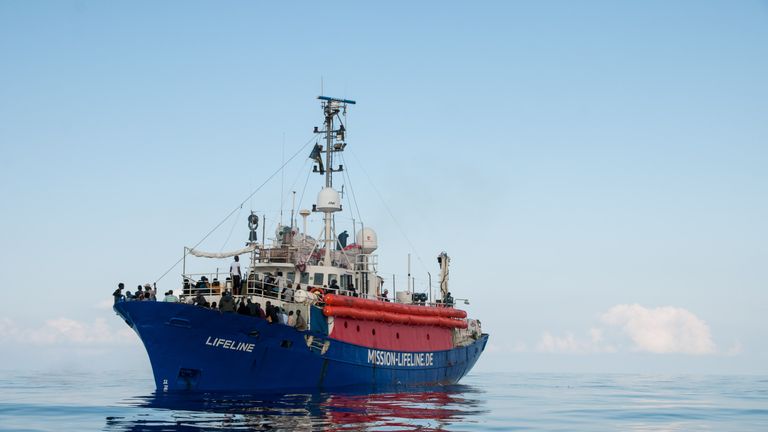
An ever-growing number of charity rescue ships are stacking up in the Mediterranean with hundreds of rescued migrants on board waiting for a country to accept them.
Italy and Malta are essentially playing chicken with them: each country holding the line; not accepting the boats until an imminent danger to life forces them to.
It's tough, reckless, maybe even illegal but, frankly, it's been effective in forcing the issue onto the table at EU level.
Italy has made it clear that it isn't willing to deal with this issue alone.
This short film which we made 18 months ago is an attempt to explain what's happening on the Med - nothing's changed since we filmed it. Watch it below.
The discussion at EU leader level seems to be going round in circles. They are talking this week about issues they were talking about three years ago: 'hotspots' to process asylum seekers, asylum centers outside the EU, beefing up the external borders.
There is no single solution and any discussion must begin with an acceptance that you can't stop migration. It's a fact of our times. It can be managed but not stopped.
Urgent reform in two key areas would make a difference.
Asylum claims must be processed with compassion and care but done fast: in days, not weeks or months as they are at the moment. And returns must be enforced. Agreements need to be made with counties to take failed asylum seekers back. None of it is straightforward. All of it is necessary.