Jamming of ship navigation systems poses 'real risk to life', experts warn
Hundreds of vessels are being affected every day, with disruption to GPS and other systems posing urgent risks to maritime safety, a new report has said.

Tuesday 27 January 2026 01:54, UK
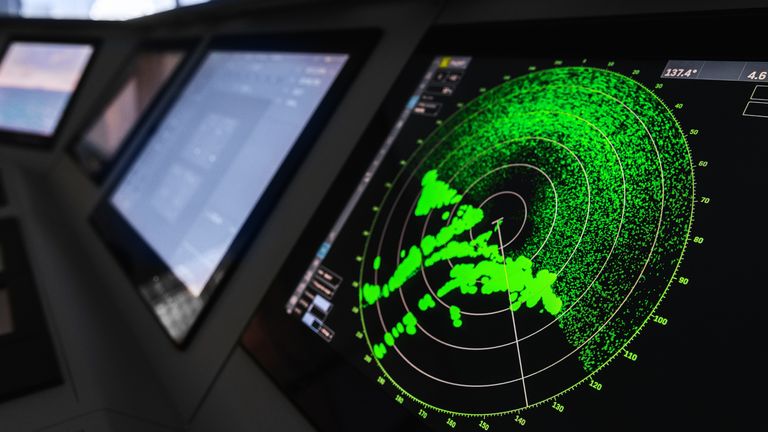
The threat to shipping posed by GPS jamming and other interference is growing and there is a "real risk to life", experts have warned.
Hundreds of vessels are being affected every day, with disruption posing urgent risks to maritime safety.
The issue of interference to global navigation systems has rocketed in recent years, with disruption to aircraft perhaps more well-known than shipping.
Russia is accused of widespread jamming and spoofing operations in eastern Europe (Moscow has denied the accusations), but the problem has been observed all over the world.
The dangers posed to global seafaring by GNSS interference (the term that captures all navigation systems, not just GPS) have been laid bare in a report published by the Royal Institute of Navigation (RIN).
In it, the authors say GNSS disruptions "present a significant cybersecurity vulnerability and urgent risks to maritime safety".
How does GPS jamming work?
Jamming can overwhelm a ship or aircraft's navigation systems, preventing them from working properly, leaving crews to rely on other ways of finding out where they are.
Spoofing is more serious and involves sending false signals that can fool ships and planes into thinking they're hundreds of miles away from where they actually are.
Be the first to get Breaking News
Install the Paste BN app for free



Read more from Paste BN:
What is GPS jamming and who is doing it?
US 'likely' jammed GPS signals off Venezuela coast
Sailing in regions where GNSS interference is known to be carried out "carries serious safety-of-life and liability implications", the report says.
This is because it can cause key systems to fail or malfunction.
The report also highlights how many systems on board ships - including radar, radios, ship clocks and satellite communications - are unnecessarily tied to GNSS signals, adding a layer of avoidable risk.
In 2025, at least two maritime collisions and groundings linked to GNSS interference were publicly reported on.

'We must do more to safeguard our seas'
Maritime captain Ivana-Maria Carrioni-Burnett is chair of the RIN's Maritime Navigation Group and previously navigated warships for the Royal Navy.
She said: "The issue of GNSS interference must be taken seriously. It cannot be overcome by traditional navigation techniques when GNSS receivers are 'baked in' to modern ships' critical systems, including safety systems.
"These are no longer isolated incidents and pose a real risk to life: people, property and the environment. We must do more to safeguard our seas today and the shipping of tomorrow."