Lebanon's devastated border towns pounded by Israeli strikes

Thursday 18 December 2025 14:25, UK
Warning: This article contains details some may find distressing
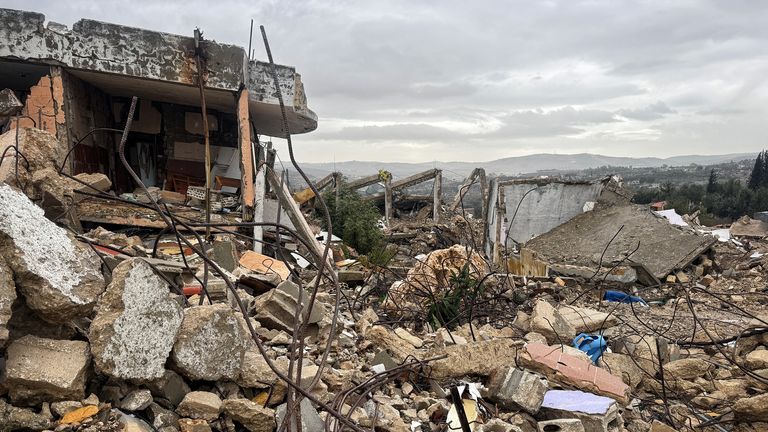
There's nothing but devastation.
Everywhere we look, Israel's wrath has rained down on Lebanon's southern border towns with a ferocity which has left very little standing or habitable.
The town of Aita al Chaab is one of the worst hit and has been left virtually unrecognisable - the residents believe that is the tactic.
"Anyone who comes to rebuild is attacked [by Israel]," a resident tells us.
It's a refrain that we hear often and from many.
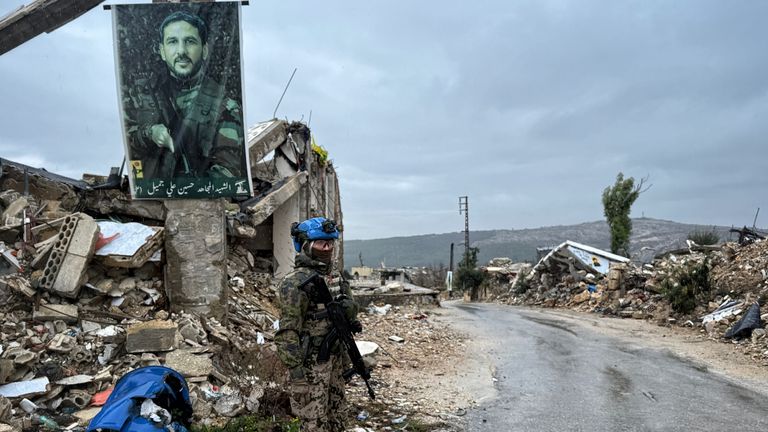
We're with Blue Helmets peacekeepers - the United Nations Interim Force in Lebanon - as they sweep into the town.
It was once a bastion of Hezbollah. The armed group used to fire rockets into northern Israel from here but it was also home to around 14,000 people - many of them civilians.
Most have fled the town, which is only about a kilometre from the Israeli border.
A few families have returned - out of desperation and hope that a year-long truce with their southern neighbours means they can rebuild and start afresh.
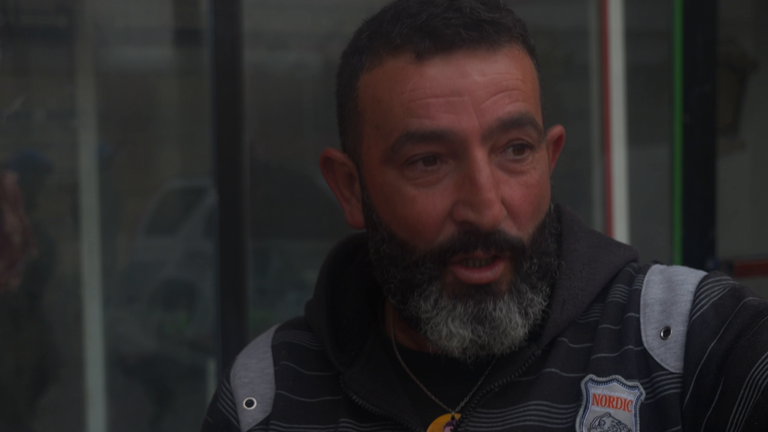
Nehmeh Mahmoud al-Zein is spitting with rage as he talks to us.
Talking about Israel, he says: "They don't let us rebuild. They don't want us to come back.
"I was the first person back here.
"I started a coffee shop and on the very first day we opened, the Israelis killed my son with a drone, right outside my coffee shop! In front of my eyes!"
His son Hassan was 26. Moments before the drone strike, he'd told his father he didn't want to stay in Aita al Chaab as he thought it was unsafe.
An Israeli drone had been hovering above them but this is so commonplace along the southern border most don't even flinch.
Hassan is one of more than 300 people killed by Israel during the truce which started in November 2024, according to Lebanese government figures.
The mother and daughter who lost everything
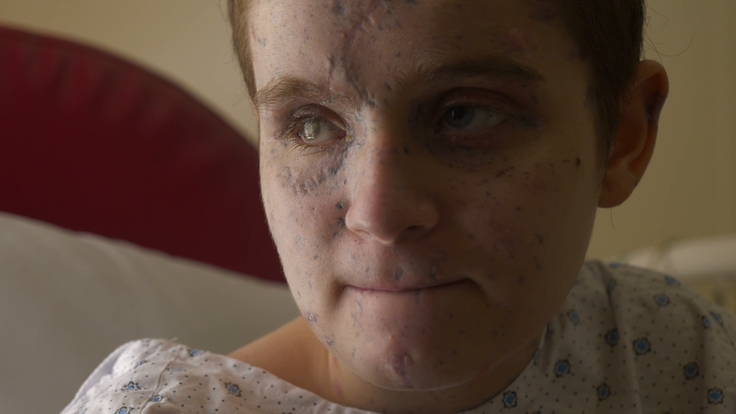
Aseel is motionless in her hospital chair. Her face is pock-marked with shards of shrapnel embedded in her skin.
The 12-year-old is one of the latest child victims of the Israeli attacks and is recovering in a hospital in Beirut.
Her right eye is a shade of shiny grey, rendered blind by the blast. She's been left with only partial sight in her left eye.
Aseel and her mother Amina are the only survivors of an Israeli drone attack which wiped out the rest of their family - Aseel's father, and her three younger siblings.
The attack near the town of Bint Jbeil was apparently targeted at a motorbike rider who the family had paused briefly to talk to by chance.
Aseel's voice is timid, raspy and weak. "That's it," she tells us. "I lost everything."
Aseel's legs were torn and burnt in the explosion and fire which followed the bombing.
"She'll need a long time to recover," says her surgeon, Dr Ghassan Abu Sittah.
"And she has many operations ahead of her. I'm just waiting for her to recover a bit more strength."
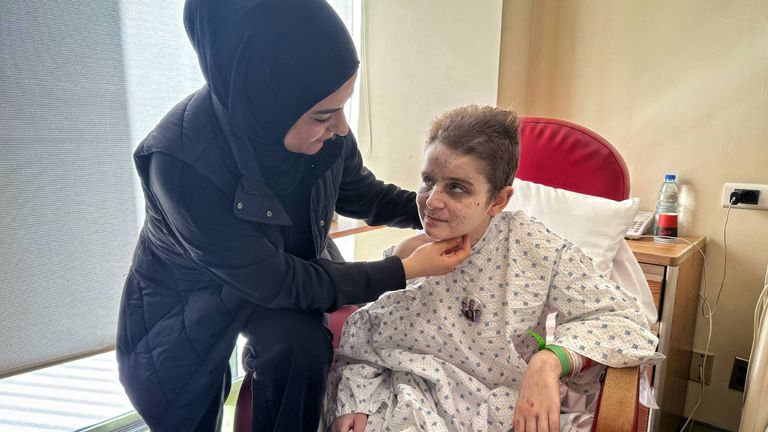
In her first interview since leaving hospital, Amina tells us in horrifying detail what happened.
She was on her mobile phone when the bomb landed next to her car.
At first, she says, she thought her phone had exploded.
The vehicle was thrown backwards and when Amina came to her senses, she started looking around the car.
What she saw is now embedded in her consciousness.
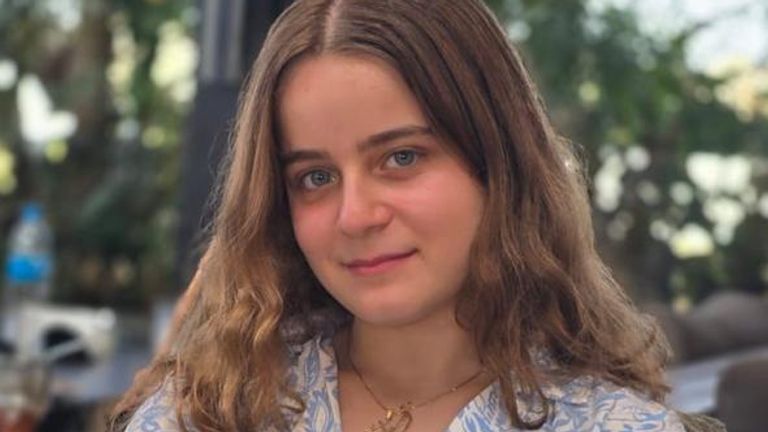
Amina saw her husband Chadi with half his body and head missing.
Panicking, she turned back to her twin babies, Hadi and Silan, who were still strapped in their car seats.
They were covered in blood and they too had been decapitated.
Amina's 10-year-old daughter Celine was next to them and she didn't seem to be so covered in blood so Amina's instant assessment was that maybe she was alive.

Chadi's leg was in her child's lap.
Celine had catastrophic internal bleeding and died soon after reaching the hospital.
Aseel, who minutes earlier had been singing to the younger ones to try to get them to sleep, was soaked in blood too.
Somehow she survived with Amina.
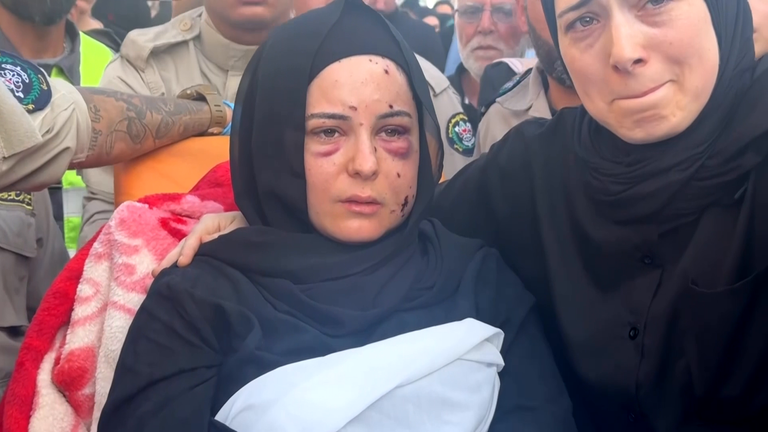
Many times since, Amina has thought the only reason she survived was to save and look after Aseel.
"Why did I have to see this? Why?
"I can't get these images out of my head," Amina tells us sobbing.
"I live only for Aseel. But I want justice. I want those who killed them to stand trial. It is my family's right."

The family were in the final stages of the visa process to move to the US, where a number of family members already live.
They'd decided to leave Lebanon after fleeing their home when the house next door was hit by an airstrike, setting the block on fire.
In a rare admission, the Israeli military said the strike on Amina's car had killed "several uninvolved civilians" and added "it regretted any harm".

Growing tensions between IDF and UN
The Israel Defence Forces (IDF) asserts, as it has done for two years, that its strikes are in self-defence.
Its justification is that Hezbollah is rearming and regrouping and therefore the group, which is designated a terror outfit by multiple Western governments, still presents a danger to Israel.
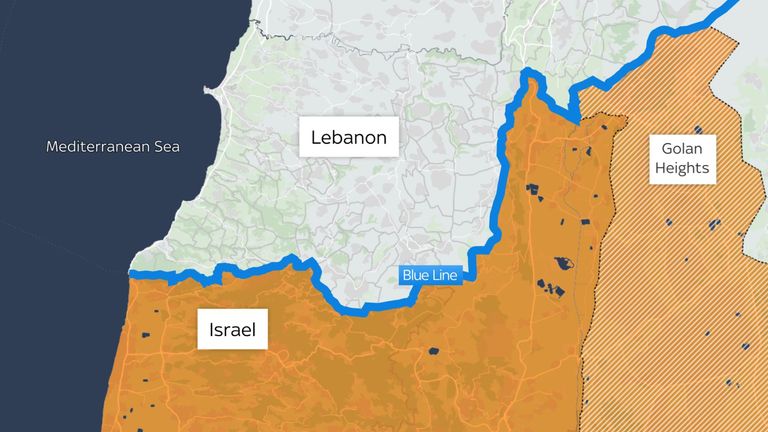
But the UN troops who monitor the "Blue Line" demarcation area along the highly contested border between the two countries say they've seen no evidence of this.
A major from the UN contingent we are with tells us: "I think most of the Hezbollah has retreated north of the Litani (river).
"We just haven't seen any evidence on the ground that there is that much activity anymore, going on".
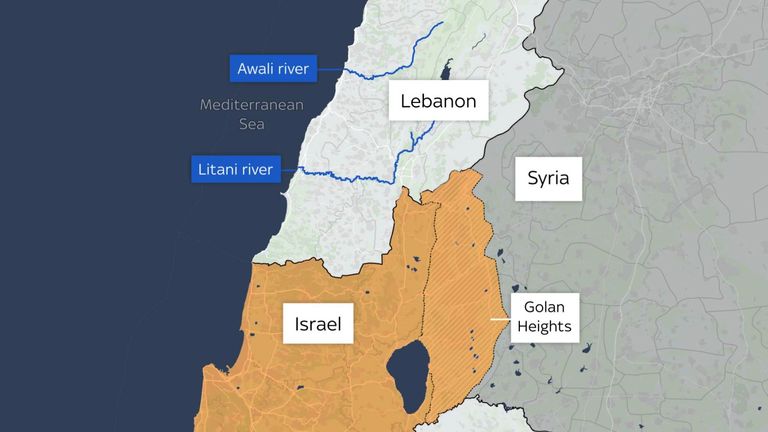
Diodato Abagnara, the UN's overall commander of troops in south Lebanon, believes the same.
He told Israel's Channel 12 that he too had seen "no evidence" that Hezbollah was rearming south of the Litani. He condemned the continued airstrikes, saying Israel was "blatantly violating the ceasefire agreement".
He also drew attention to Israel remaining in five military positions along the Blue Line, in contravention of the UN Security Council resolution 1701.
The UN has documented more than 10,000 ceasefire violations since the start of the truce. The vast bulk of them, it says, have been committed by Israel.
There's been increasing tension between the UN monitors and the IDF over the past few months, with a growing number of complaints from the UN about attacks on or near its forces.
The most recent was on 9 December.
The IDF said then that it was firing warning shots at an approaching subject. On another occasion it excused firing near UN forces, saying there was poor visibility due to adverse weather conditions.
The UN says it informs the IDF in advance of the patrol's exact locations, routes and timings.
The growing divides
Israel has built a very long and highly controversial wall along the Blue Line - and we saw extensive construction remains ongoing.
UN monitors say there are two areas where the wall has been positioned inside Lebanese territory, cutting off about 4,000 square metres to residents.
Several of the residents we spoke to in multiple border towns said sections of their farmland were now inaccessible because of the Israeli aggression they face if they venture onto the land.
One family in Kfar Chouba told us about 90% of their farmland was now effectively under Israeli control.
Despite the truce which was meant to see the withdrawal of Israeli troops from Lebanese territory, residents of Kfar Chouba showed us videos they'd taken of Israeli troops moving around the town, bulldozing their homes, laying mines which they later detonated, and trashing their farms.
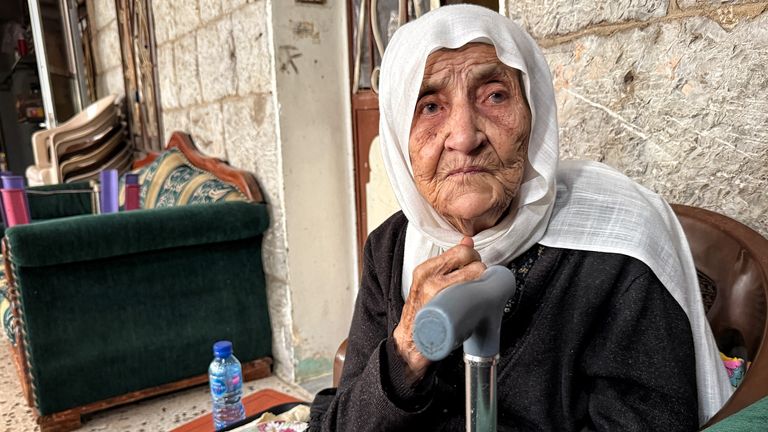
The oldest resident of Kfar Chouba is just three years short of her century.
"We've built our house three times," Zahia Kassab says, holding her fingers in front of us.
"We build. Israel destroys. We build. Israel destroys. I don't like them," she says.
"They should go away from here."
Lebanon's fate 'in the hands of the US'
In a rare interview with foreign media, the only woman on Hezbollah's political council tells us the group will never disarm.
"Israel was bombing us before the existence of Hezbollah," Dr Rima Fakhry says.
"We don't believe the Israelis are honest in what they are saying."
She adds: "Our experience with the Israelis proves they're manipulators.
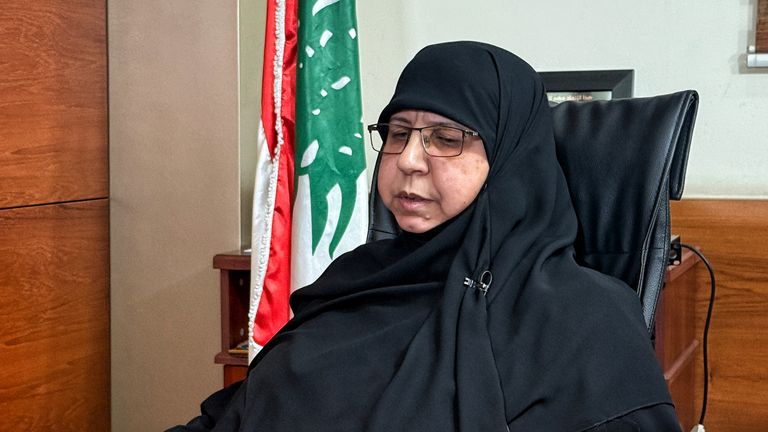
"If we're unarmed, they'll just attack Lebanon.
"We really believe the Israelis' decision is in the hands of the Americans.
"If the Americans forced Netanyahu and Israel to stop the war and the aggression today, they'd stop it."
Alex Crawford reports from Lebanon with specialist producer Chris Cunningham, Lebanon producer Jeehad Jneid and camera operator Garwen McLuckie. Photography by Chris Cunningham