'One in eight' children and teenagers has mental health disorder
As a major study reveals youngsters are self-harming or attempting suicide, there's a warning that young lives are being "ruined".
Thursday 22 November 2018 11:48, UK
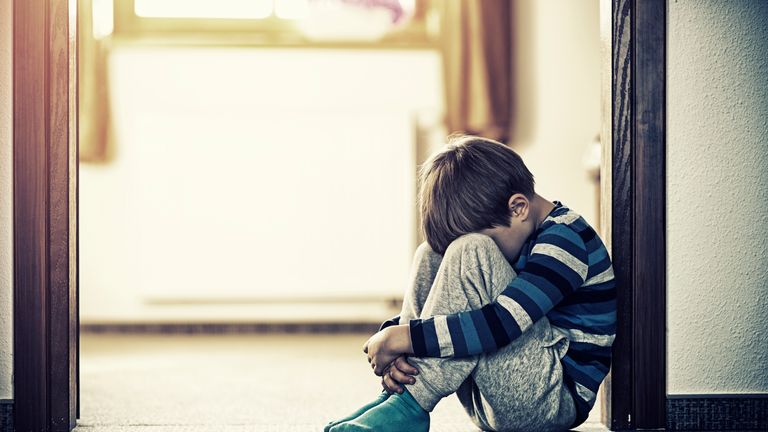
One in eight children and teenagers in England had a mental health disorder in 2017, a major new study has found.
Between the ages of 17 and 19 that figure rose to one in six, with girls more than twice as likely to be suffering than boys.
A quarter of 11 to 16-year-olds with a mental disorder had self-harmed or attempted suicide, rising to 46.8% for 17 to 19-year-olds.
Among 14 to 19-year-olds who identified as lesbian, gay or bisexual, 34.9% had a mental disorder, compared to 13.2% for those who considered themselves heterosexual.
The study revealed a "crisis" that was "ruining young lives", YMCA chief executive in England and Wales, Denise Hatton, said.

NHS Digital, the health service's data arm, studied information from 9,000 youngsters aged five to 19, broadening the age group it covers, having previously looked at five to 15-year-olds.
Within the 10-year age span, it said emotional disorders had become more common, rising from 4.3% in 1999 to 5.8% in 2017.



The incidence of mental disorders within the same age range rose from 9.7% in 1999 and 10.1% in 2004, to 11.2% in 2017.
When the age range was increased to include all teenagers, 12.8% were found to have a mental health disorder last year, but that figure cannot be compared to previous studies.
Among pre-school children, one in 18 had at least one mental disorder.
Information was collected from youngsters, their parents and teachers.
Emotional disorders, behavioural disorders and hyperactivity disorders were among ten main topics.
Ms Hatton said it was "crucial that action and investment goes into preventing young people from experiencing poor mental health in the first place".
She added: "Mental health must be incorporated in every aspect of daily life to stop young people from reaching crisis point.
"Too many young people are still left alone to deal with their mental health difficulties by themselves, leading to a vicious circle of solitude and suffering."

Lily Makurah, national lead for mental health at Public Health England, said: "We're working with partners to minimise risks for children and young people and enhance factors that promote and protect positive mental health at key stages across a child's life."