Want to get tickets to the 2026 World Cup? Here's everything you need to know
Tickets for next year's World Cup in the US, Mexico and Canada have gone on sale. Here's all you need to know about how to buy them, when and how much they cost.
Monday 8 December 2025 09:40, UK

More than six million tickets are being sold for next year's FIFA World Cup in the US, Mexico and Canada.
With 48 teams instead of the usual 32, this summer's World Cup will be the biggest ever, seeing a total of 104 games played.
FIFA says nearly two million tickets have already been snapped up through its first two phases of selling, with the third phase set to begin on 11 December.
Everything to know about World Cup 2026
It has also issued a warning to fans to be "wary" of unofficial websites purportedly selling tickets that aren't yet on the market, after Paste BN discovered tickets already being sold for eye-watering prices by the platform Vivid Seats.
Here's all you need to know.
When is the World Cup?
The tournament runs from 11 June to 19 July 2026 and will be played at 11 sites in the US, three in Mexico and two in Canada.
A total of 48 countries will be involved and 104 games will be played overall.
The host nations automatically qualify and will play all three of their group stage matches on home soil.
How to get tickets
Tickets for the World Cup have been released in three phases, each with slightly different rules on who can buy the tickets and how.
Phase one was a Visa Presale Draw for people with a valid, unexpired Visa debit card, credit card, or reloadable prepaid card enabled with 3D Secure. This phase has already closed.

Phase two ran from 27 to 31 October, and saw registered individuals allocated time slots to purchase tickets from 12 November to early December.
If you missed your assigned time slot to purchase tickets, it cannot be rescheduled.
Phase three
The third phase, called a random selection draw, will start after the final draw of teams on 5 December determines the World Cup schedule.
It starts on 11 December, with the entry period for fans open until 13 January.
Those wanting tickets will need to have a FIFA ID in advance, which can be created via FIFA.com/tickets.
It's from this same site that entries to the random selection draw will begin on 11 December, at 4pm UK time.
Fans will be able to submit applications for specific matches.
If you are successful, you will receive an email and be automatically charged for your tickets in February with the details that you have provided.
Hospitality tickets
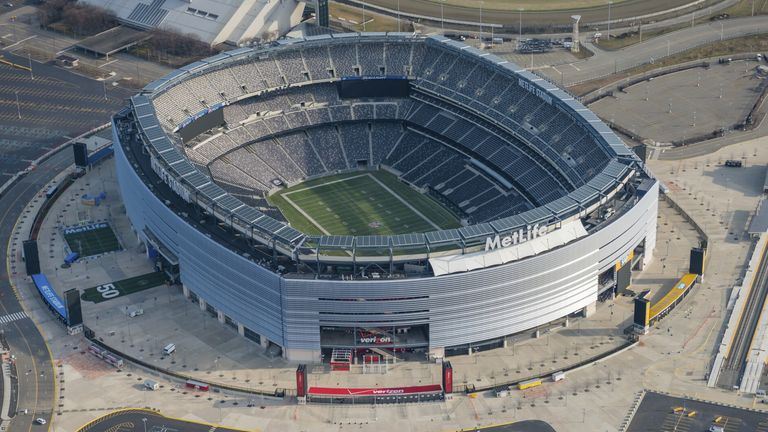
Hospitality tickets have been on sale since May for the eight matches at MetLife Stadium in East Rutherford, New Jersey, including the final on 19 July.
These allow individuals access into VIP lounges, the option to hire private suites and exclusive "platinum access" tickets, which FIFA defines as an "all-encompassing experience with full-service customisation".
American Airlines also announced in October that members of its AAdvantage loyalty programme can redeem miles for World Cup tickets.
How much will tickets cost?
FIFA says the cheapest tickets are from $60 (£45) in the group stage. But the most expensive tickets for the final are $6,730 (£5,094).
Unsurprisingly, it's way up from the range of $25 (£19) to $475 (£353) the last time the US hosted the tournament in 1994. For the 2022 tournament in Qatar, tickets cost the US dollar equivalent of $69 to $1,607.
Prices for hospitality tickets are considerably more, ranging from $3,500 (£2,604) to $73,200 (£54,467) per person.
Initially, FIFA suggested tickets would be sold using dynamic pricing, meaning fans would pay different prices according to demand.
Variable pricing had never been used at a World Cup before, raising concerns about affordability.
FIFA has now backed away from it, saying allocations would be set at a fixed price for the duration of the next ticket sales phase.
The world football's governing body said in a statement to Paste BN: "FIFA can confirm ringfenced allocations are being set aside for specific fan categories, as has been the case at previous FIFA World Cups. These allocations will be set at a fixed price for the duration of the next ticket sales phase.
"The pricing model adopted for FIFA World Cup 26 reflects the existing market practice for major entertainment and sporting events within our hosts on a daily basis, soccer included."
What about visas?
For those outside the US, Canada or Mexico, securing tickets is not enough to guarantee you will be at World Cup games.
People travelling to the US or Canada will need to secure visas in order to make it to the tournament. Most tourists do not need a visa to travel to Mexico.
For example, if travelling from the UK to America, Britons will need an ESTA for visits under 90 days, or a B-2 visa for longer stays.
From the UK to Canada, Britons will typically need an Electronic Travel Authorisation (ETA), which allows visits for up to six months.
FIFA has warned that any ticket holder who fails to obtain the necessary visa or travel authorisation, or is denied entry due to non-compliance with any requirements, will not be entitled to any form of compensation.
Donald Trump announced in November that those who need visas to attend the World Cup will be able to go through a "FIFA portal" to help get their visa application and interview prioritised at the State Department.
This will be known as the FIFA Prioritised Appointment Scheduling System, or FIFA PASS.
Read more from Paste BN:
Warning to UK fans travelling to World Cup
Trump can dictate which cities are safe to host World Cup, FIFA says

Listen to The World with Richard Engel and Yalda Hakim every Wednesday
Tap to followUS Secretary of State Marco Rubio said the administration had added 400 consular officers around the world to deal with increased demand for visas, with individuals still having to go through the same vetting, but will "move up the queue" in order to get correct travel documents in place on time for the tournament.
Despite the new system, Mr Trump said he "strongly" encourages World Cup travellers to the US to apply for their visas "right away".
What are the fixtures?
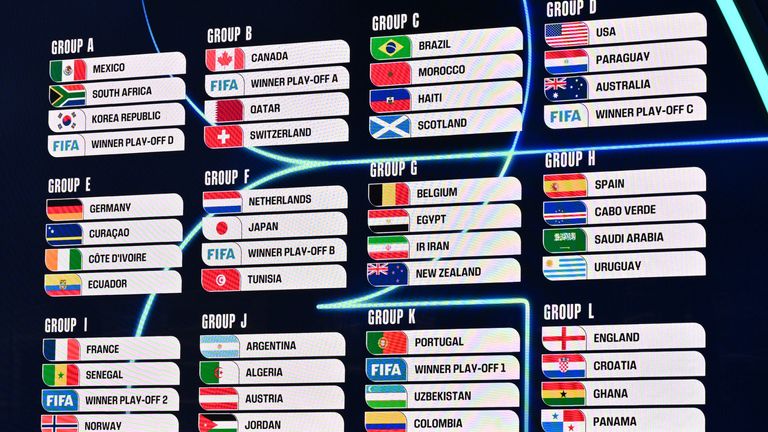
England are in Group L, and will begin their campaign on 17 June in Texas against Croatia, who knocked the Three Lions out in the 2018 World Cup.
Here's England's full fixture list:
• England vs Croatia - 17 June, Dallas, 9pm (UK time)
• England vs Ghana - 23 June, Boston, 9pm (UK time)
• Panama vs England - 27 June, New York-New Jersey, 10pm (UK time)
Scotland's timetable is less favourable for fans at home, who will need to stay up through the night to watch their side take on opponents including five-time winners Brazil.
• Haiti vs Scotland - June 14, Boston, 2am (UK time)
• Scotland vs Morocco - June 19, Boston, 11pm (UK time)
• Scotland vs Brazil - June 24, Miami, 11pm (UK time)
Here's the full list of groups: