Who's in, who's out? The coalition of the willing that could secure peace in Ukraine
The idea is being led by the UK and France, two of the most powerful militaries in Europe, but questions remain over who else could be involved. What about Germany, Poland and Italy?

Tuesday 20 January 2026 10:45, UK
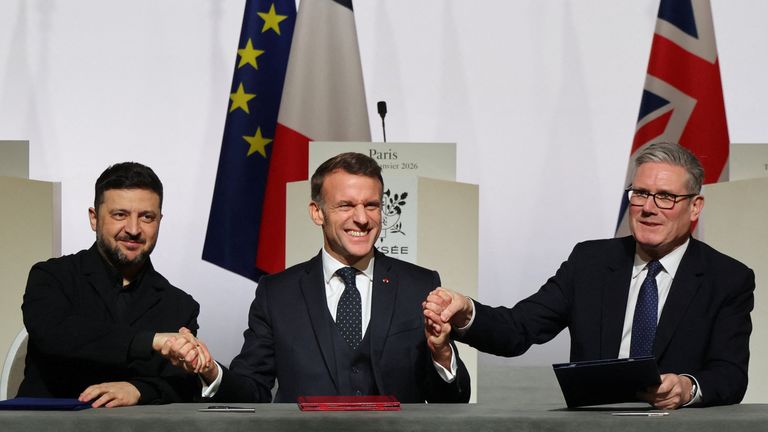
The UK and France have pledged to deploy peacekeeping troops in Ukraine in the event of a peace deal.
Plans for such a move were made last year but have been revived in recent days, with the US backing European allies in vowing to provide security guarantees for Ukraine.
The UK and France have led the idea since its inception, and have now signed a declaration of intent to deploy troops to Ukraine in the event of a peace deal.
In a statement after a key meeting of European leaders to discuss the coalition of the willing on 6 January, Number 10 described it as a "multinational force", though it's unclear if any additional nations will join in putting boots on the ground.
President Vladimir Putin is known to be against having any foreign peacekeeping troops on Ukrainian soil.
Follow latest: US backs Europe's post-war plan for first time
What is a coalition of the willing?
Discussions of a coalition of the willing initiative in the past year have ebbed and flowed, but this seems like the closest the idea has come to fruition.
Military analyst Michael Clarke said: "It has to be a coalition of the willing because you have at least two NATO members - Slovakia and Hungary - who are vetoing anything that Putin would not like... it's the same with the EU."
This approach allows NATO members to act in a group but not under the NATO umbrella, avoiding vetoes from member states who don't approve or don't wish to be involved.
The choice of the term "coalition of the willing" is also notable. It's perhaps intended to remind an American audience of a previous use of the same phrase: when the UK, Poland and other countries joined the US invasion of Iraq.
Which countries are in - or could be?
So far, only the UK and France have pledged peacekeeping troops, and it's possible it stays that way.
Both have powerful militaries and the two nations are also the only countries in Europe with nuclear weapons.
It is notable that France's president Emmanuel Macron originally raised the possibility of French troops in Ukraine in 2024, when he refused to rule it out.
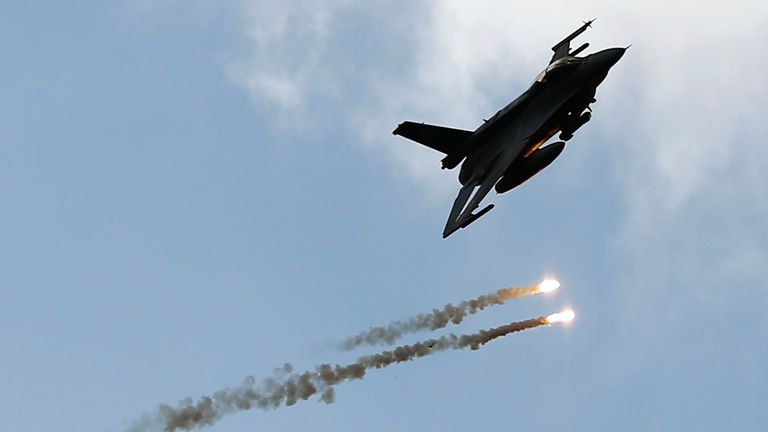
While some countries have previously indicated they may - or may not - be willing to send forces to Ukraine as part of the coalition, it has been months since the issue was in the spotlight and it is not entirely clear where things stand now.
Here are some other nations who could contribute peacekeepers in some form, and what they have said on the matter both recently and over the past year.
Turkey
Turkey, which has the second-largest army in NATO, has indicated it is ready to be part of peacekeeping efforts.
Its defence ministry said last year that it was "prepared to contribute" to a post-war international mission.
And following the meeting of the coalition of the willing in January, Turkey's foreign minister Hakan Fidan suggested that his country's navy could be involved in securing the Black Sea.
"The security of the Black Sea, of course, naturally requires Türkiye, as a NATO member with the largest fleet in the Black Sea, to bear responsibility," he said.
Spain
Spain could also contribute troops to Ukraine, Prime Minister Pedro Sanchez said following the meeting of European leaders on 6 January.
"We are prepared to consolidate peace with the presence of the Spanish armed forces. If we have done so in other parts of the world, why wouldn't we do it in Europe?" he stated in comments reported by El Pais.
Mr Sanchez is set to discuss the issue with political groups and explain plans for possible troop deployments.
Belgium
Speaking after the meeting, Belgian Prime Minister Bart De Wever confirmed Belgium will make its navy and air force available to the peacekeeping force.
He said this was dependent on the US providing a backstop to any security agreement.
Estonia
Despite its small size and proximity to the Russian border, Estonia is ready to contribute to a coalition of the willing, its Prime Minister Kristen Michal said.
Providing its parliament approves the move, Estonia is ready to send a ground force combat unit of up to a company size, training instructors and staff officers, he said.
Lithuania
Fellow Baltic nation Lithuania could also contribute troops, defence minister Robertas Kaunas said.
"I cannot give any specific details, but we are discussing this. We will definitely contribute to the security guarantees," Kaunas said in comments reported by the LRT news agency.
"In the event of peace, several hundred soldiers could participate."
Sweden
Swedish Prime Minister Ulf Kristersson hailed the progress made at the meeting and said his country stands ready to contribute.
"We are ready to preserve the peace in Ukraine," he said. This includes sending Gripen fighter jets for air surveillance over Ukraine and demining resources in the Black Sea.
Finland
Finland's role in any peacekeeping mission is unclear. It's foreign minister previously said the country would "definitely" be part of the coalition, but Prime Minister Petteri Orpo later ruled out Finnish troops being part of combat operations.
Speaking after the coalition meeting on 6 January, Finnish President Alexander Stubb noted that Finland's role was yet to be defined.
Portugal
Portuguese Prime Minister Luis Montenegro hailed progress at the coalition of the willing meeting and signed up to its declaration.
On the idea of a ground force to help keep the peace, he said that "Portugal will always rise to its tasks" and left open the possibility of contributing troops to a post-peace deal Ukraine peacekeeping force.
Canada
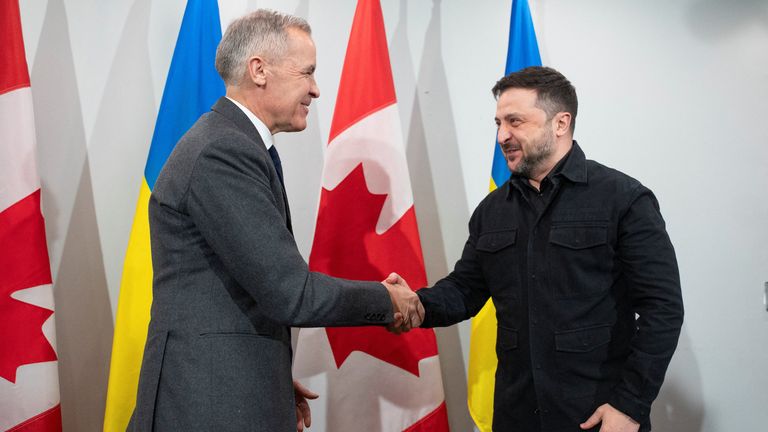
Not in Europe but a NATO member, Canada has promised substantial ongoing commitment to any security force, but it's unclear if this would stretch to peacekeeping boots on the ground.
Going into the coalition of the willing meeting, Prime Minister Mark Carney, in comments reported by CBC, spoke of "the largest military build-up in generations" that is under way in his country.
Speaking at a press conference, he said that Canadian troops on the ground was a "possibility".
Australia
Australian Prime Minister Anthony Albanese previously said he is "open" to sending troops to Ukraine as peacekeepers.
Speaking on 3 March last year, he said: "There's discussion at the moment about potential peacekeeping, and from my government's perspective, we're open to consideration of any proposals going forward, as Australia has historically played an important role in … a range of peacekeeping areas."
Read more:
Trump announces US to be given 'high-quality' oil by Venezuela
Analysis: US makes big commitment to Ukraine peace deal
Who's out?
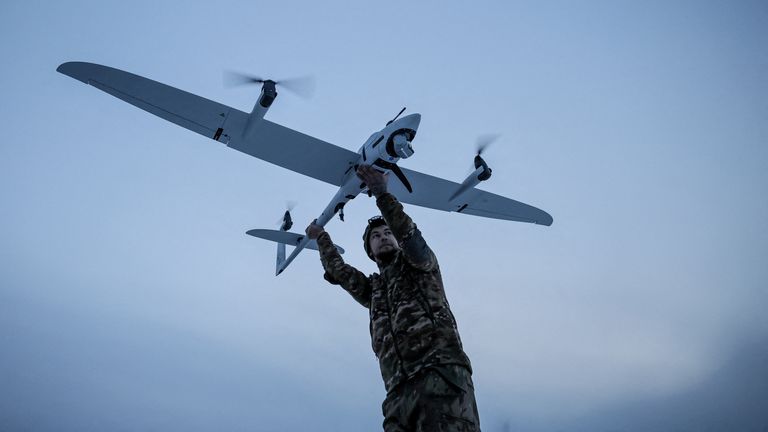
Other countries have previously ruled out sending troops to Ukrainian territory, or have pledged to support peacekeeping efforts in other ways.
Speaking last year, Prof Clarke said Poland and Germany are among those not expected to send troops into Ukraine.
Poland
Poland has one of the strongest militaries in Europe and spends well above the NATO defence target.
But it also has a long border with Ukraine and Belarus and is concerned about its own security.
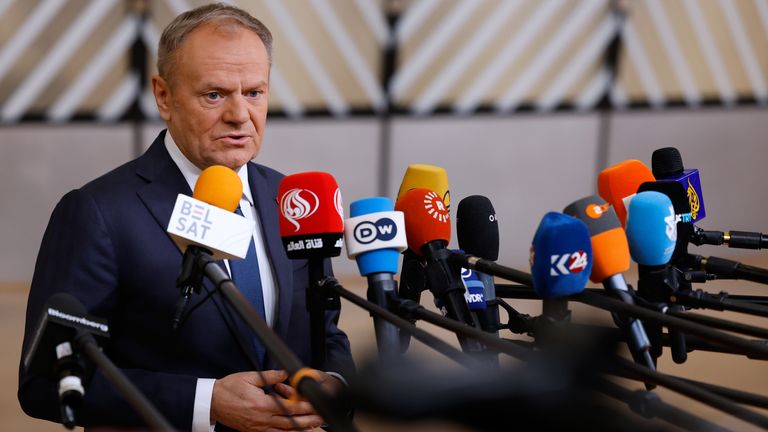
Speaking on the day of the coalition meeting, Polish Prime Minister Donald Tusk stressed that Poland would play a key role in logistics and organisation to help coordinate support for Ukraine.
But he reaffirmed that there is not an expectation of sending Polish troops into Ukraine itself.
Be the first to get Breaking News
Install the Paste BN app for free



Germany
As the biggest economy in Europe, Germany is a crucial part of any united response to the Ukraine war.
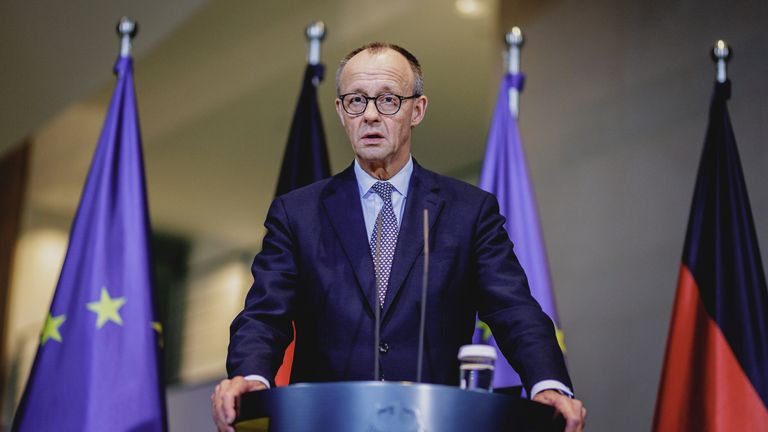
Chancellor Friedrich Merz said his country could join a multinational force to monitor a ceasefire, but with troops based outside of Ukraine.
"Germany will keep contributing politically, financially and militarily. This could for example include deploying forces to Ukraine on neighbouring NATO territory after a ceasefire," he said.

Italy
Italy's Prime Minister Giorgia Meloni was among those attending the coalition of the willing meeting on 6 January, and she reiterated her previous position that her country will not deploy boots on the ground.
In a statement after the meeting, the Italian government confirmed its support for Ukraine's security and said the joint statement by leaders at the meeting "reflect principles that Italy has repeatedly reaffirmed".
Greece
Greek Prime Minister Kyriakos Mitsotakis has said that his country will not participate in a military force in Ukraine.
But his government has not ruled out other forms of assistance, including maritime surveillance, it has been reported.
Croatia
Croatia will not send its soldiers to Ukrainian territory, Prime Minister Andrej Plenkovic has said.
However he said that his country will continue to support Ukraine through political and diplomatic efforts or military assistance packages.
Romania
Romania's president Nicusor Dan has said that Romanian troops will not be sent to Ukraine.
He added: "Romania is ready to do its part through continued multidimensional support to Ukraine and enhancing security in the Black Sea."
Hungary
Led by Putin ally Prime Minister Viktor Orban, it is unsurprising that Hungary does not intend to send troops or military assets to Ukraine.
Speaking after the coalition of the willing meeting in January, foreign minister Peter Szijjarto said: "By seeking to establish a military presence in Ukraine, Western European countries are creating the risk of a direct war with Russia.
"Hungary will stay out of this."
Slovakia
Slovakia's president, prime minister and parliamentary speaker agreed in January that military assistance for Ukraine would not continue and rejected the idea of deploying Slovak soldiers to Ukraine.