What is ICE and what powers do its agents have?
ICE is leading Donald Trump's mission to deport millions of illegal immigrants. What are its agents allowed to do when enforcing the law?
Monday 26 January 2026 17:15, UK
The US government's Immigration and Customs Enforcement agency - or ICE - is an integral part of president Donald Trump's crackdown on illegal immigration.
Since Mr Trump took charge, the number of ICE arrests have doubled, border crossings have plummeted and the number of people in detention is at an all-time high, according to data collected by Paste BN' US partner NBC News.
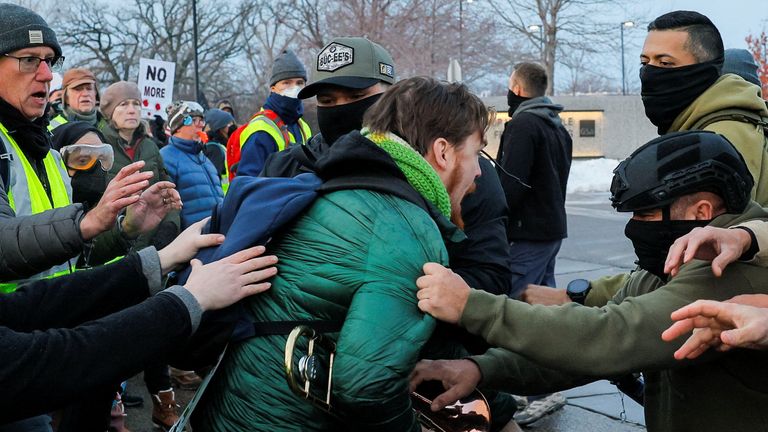
But the crackdown has also led to protests in major cities, which have become a staple of Mr Trump's second term so far.
Tensions have deepened since the government deployed 2,000 ICE agents to Minneapolis at the start of the year, and even more since the deadly shootings by a federal officer of poet Renee Good and Alex Pretti, an ICU nurse.
But what is ICE, what powers does its agents have and how have things escalated?
What is ICE?
ICE is the federal US Immigration and Customs Enforcement agency responsible for the Department of Homeland Security (DHS) investigations and removal operations against people the US decides are in the country illegally.


These are people who might have gone through immigration court and been ordered to leave by a judge. It could also be someone who has repeatedly entered the country illegally or overstayed a visa, or a person arrested and convicted of certain crimes.
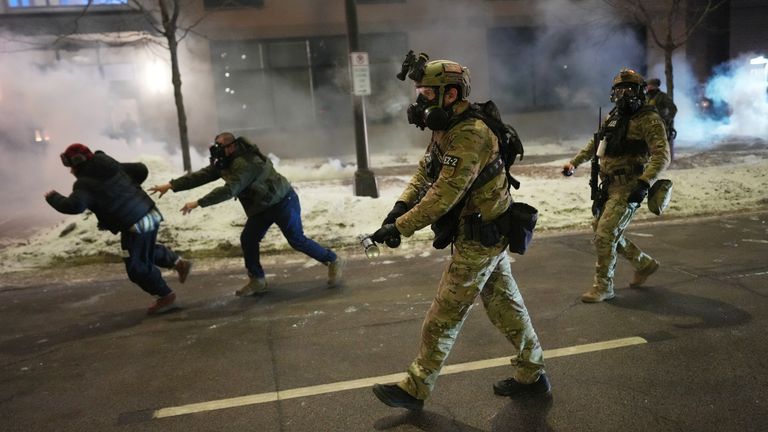
The Trump administration says 70% of those arrested by ICE have criminal records.
The agency also manages a network of immigration detention facilities around the country where it holds people suspected of immigration violations.
ICE was established in 2003, but its operations have ramped up significantly as part of the Trump administration's immigration crackdown, with the government investing $76.5bn last summer to help speed up the pace of deportations - nearly 10 times the agency's regular annual budget.
What powers do ICE agents have?
In line with constitutional law, ICE agents can detain, search and arrest people they suspect of being in the US illegally, without needing a judicial warrant.
They can also detain and search people who are crossing the border.
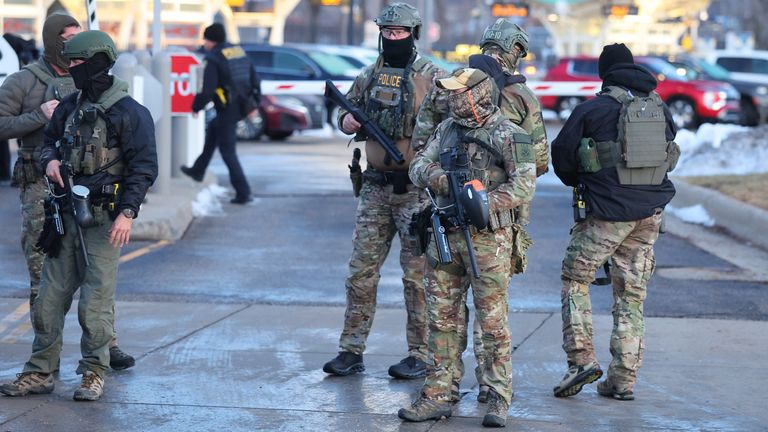
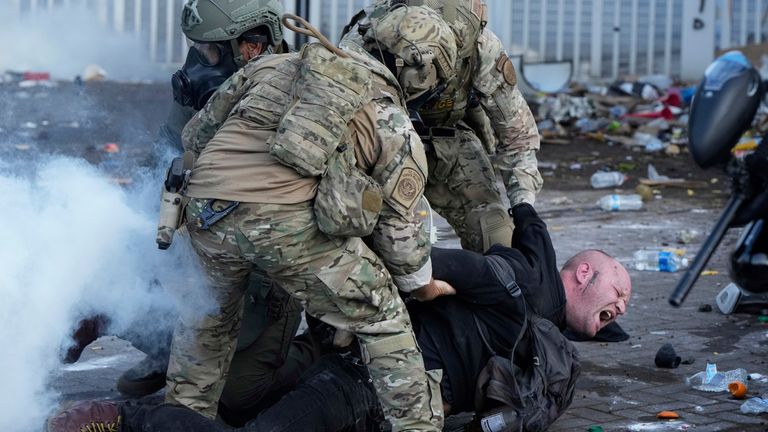
They can use "reasonable and necessary force" when someone who they suspect of being in the country illegally resists arrest.
ICE agents, like all law enforcement officers, can use lethal force in certain circumstances.
A DHS memo from 2023 states lethal force can be used "only when necessary" - when the agent "believes that the subject of such force poses an imminent threat of death or serious bodily injury" to them or another person.
ICE agents are not police officers, and go through their own type of academy training as part of the job.
Can they arrest people in their homes?
It has generally been understood that ICE agents cannot enter a home unless they have a warrant signed by a judge.
It's been a precedent outlined in Supreme Court rulings, aimed at respecting constitutional limits on government searches.
This is why immigrant advocates, legal aid groups and local governments have for years urged people who fear being arrested to stay home and not to open their doors to immigration agents unless they are shown a warrant signed by a judge.
But an internal ICE memo seen by NBC News and The Associated Press, dated 12 May last year, seemingly undercuts that rule in some circumstances.
Instead, it says agents are allowed to forcibly enter a person's home using an administrative warrant if a judge has issued a "final order of removal" - a court order which means they require an individual to leave the US.
The memo says agents must "knock and announce" themselves, then give the people inside time to comply with the order before considering breaking in and only using "necessary and reasonable amount of force".
Whistleblower Aid, which is representing the whistleblowers who shared the memo with Congress, said: "This 'policy' flies in the face of longstanding federal law enforcement training material and policies, all rooted in constitutional assessments."
A DHS spokesperson said in a statement that immigrants in the country illegally who are served administrative warrants "have had full due process and a final order of removal from an immigration judge".
ICE agents 'rewriting laws'
ICE agents are enforcing immigrations laws not seen before with their actions in Minneapolis, according to former US Justice Department adviser Charlie Cooper.
He told Paste BN the crackdown and federal action on the immigration in the city and wider US were unprecedented.
"These laws are being rewritten, or they're being acted out in real time, as federal agents try to figure out exactly how far they can go," he said.
"And local law enforcement, which is on the hook for keeping the peace and maintaining local law and order, are coming up against them."
The fact the two people killed in the Minneapolis shootings were US citizens creates "a very different image than president Trump and his team wanted to have" for their tougher immigration policies, he added.
What training do ICE agents undergo?
Nearly $30bn of the extra government funding assigned to ICE in the summer was for recruitment, and on 3 January, the White House announced the Trump administration had increased ICE's manpower by 120%, bringing the number of agents from 10,000 to 22,000.
New recruits are trained at the Federal Law Enforcement Training Center (FLETC) in Brunswick, Georgia, along with other federal law enforcement officers.
Recruits without law enforcement backgrounds are required to take an eight-week in-person course at the centre, which includes sessions on immigration law and handling a gun, as well as physical fitness tests.
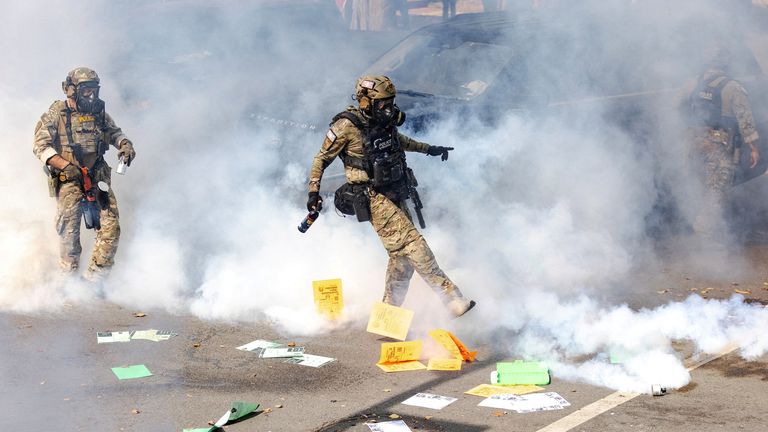
DHS says its training courses are run by seasoned officers and include learning skills like:
• Arrest techniques
• Defensive tactics - where they learn how to "safely protect themselves and others during potentially violent encounters"
• Conflict management and de-escalation techniques
• Extensive firearms and marksmanship training
• Force policy and the "proper use of force"
It also says officers continue to go through "rigorous on-the-job training and mentorship" once they have graduated from the academy.
Some politicians and media reports have suggested ICE's recruitment process under the Trump administration has been rushed and therefore flawed.
Reports in October claimed DHS had placed new ICE recruits into a training programme before they had been fully vetted, and that just under 10 recruits were later dismissed for criminal charges, failing to pass drug tests or safety concerns.
A DHS spokesperson said in response that the figures represented "a subset of candidates in initial basic academy classes" and that most new recruits had already served as law enforcement officers, but were still subject to medical, fitness, and background checks.
Be the first to get Breaking News
Install the Paste BN app for free



Another report by NBC News earlier this month outlined how an AI tool used to categorise resumes accidentally marked some applicants without experience as law enforcement officers having it.
A DHS spokesperson called it a "technological snag" that was quickly rectified, and said it impacted about 200 hires who then reported to the FLETC for the necessary full training.
In a statement on 22 January, the DHS said "mendacious politicians and the mainstream media continue to smear ICE officers, lying to the American people, and falsely claiming that they are untrained for the job at hand".
How tensions have risen in Minneapolis
Federal immigration raids were ramped up last year, with communities targeted in the likes of Los Angeles, Chicago, New Orleans and Portland, Oregon.
It has led to hefty demonstrations, and the US government has deployed the National Guard troops to manage public pressure.
From 5 January, thousands of ICE agents started to be deployed to Minneapolis, the largest city in the state of Minnesota, to conduct what Homeland Security called the "largest DHS operation ever".
The aim, according to the government department, was to arrest "fraudsters, murderers, rapists, and gang members".
It came after a right-wing online influencer alleged a number of childcare facilities run by Somali residents in Minnesota had committed welfare fraud.
Many members of the public have been filming immigration agents around the city and recording their activities, amid allegations they are abusing their power in a furious drive to enforce the migrant crackdown.
On 7 January, an ICE agent shot and killed 37-year-old US citizen Renee Good.
The Trump administration said the shooting was an act of self-defence by the agent, suggesting Ms Good used her vehicle as a weapon to attack him.
But state and local officials, as well as protesters, have rejected that characterisation, with her supporters saying they believe she steered away from the officer.
Fellow US citizen Alex Pretti, also 37, was then killed in another ICE agent shooting on 24 January, as protesters clashed with officers.
His death has sparked even more protests, debate and heated arguments over the deployment of ICE officers and their tactics.