World's oldest fossilised forest, 400 million years old, discovered in China
The excavation helps show what life looked like before dinosaurs or mammals roamed the Earth.
Thursday 8 August 2019 16:56, UK
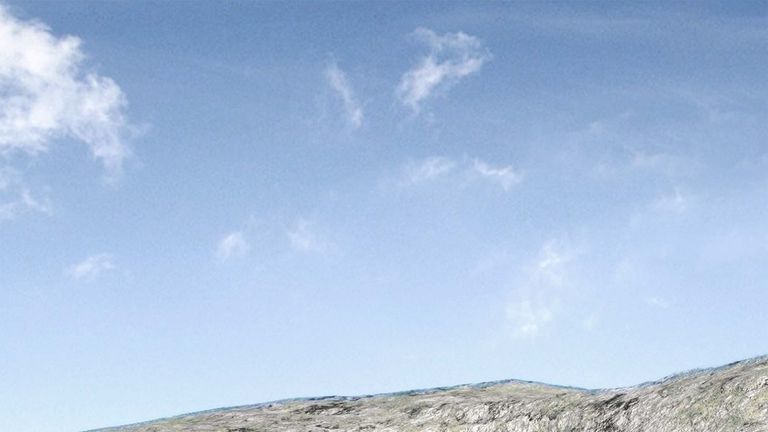
An ancient fossilised forest around 400 million years old has been uncovered in China.
Measuring 250,000 square metres, it is the largest Devonian period forest ever uncovered.
The fossilised lycopsid trees were discovered near Xinhang and were as tall as 7.7m (25ft 3in) - similar to the length of a London bus.
Only three forests from the Devonian period have ever been discovered. The other two were found in Svalbard, Norway, and upstate New York.
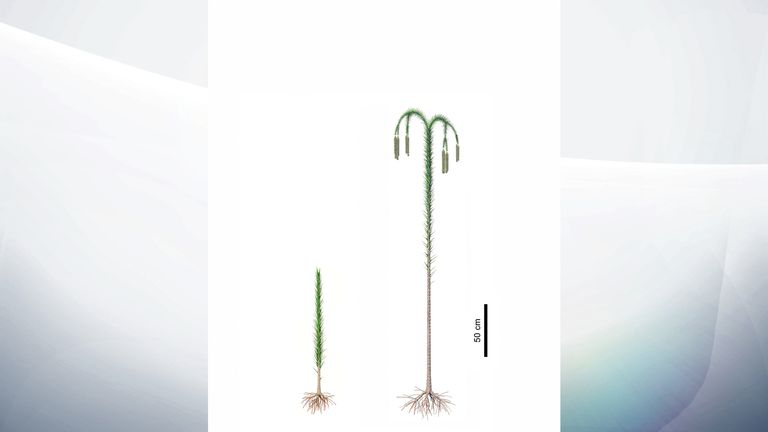
The Devonian era was between 359 and 419 million years ago and marks a time when forests spread across the continents.
Named after rocks studied in Devon, England, the era saw the sudden growth of plants in both size and variety - often referred to as the "Devonian Explosion".
The recently uncovered fossilised trees are visible within the clay walls of two quarries in China.



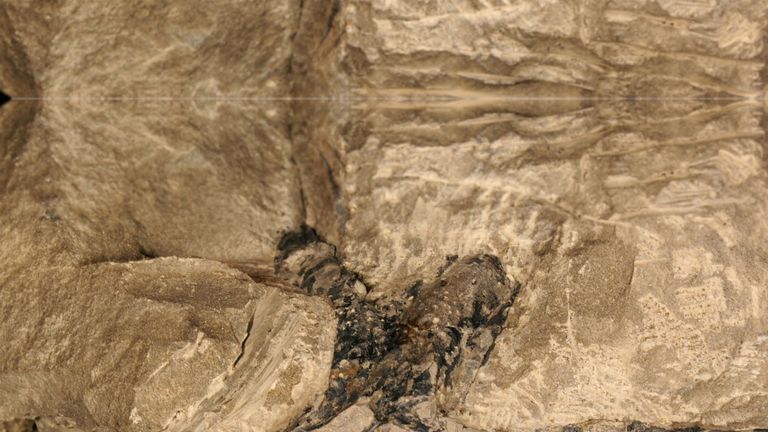
"When the excavators stop or left, we come close to the high walls and look for exposed erect lycopsid trunks," said Professor Wang from Peking University.
The excavation helps show what life looked like nearly 200 million years before dinosaurs or mammals roamed the Earth.
After the Devonian period, the lycopsids rapidly multiplied becoming a key feature of the later Carboniferous period and their remains became much of the coal we still use today.
Many types of lycopsid plants still live today, including club mosses and quillworts.