Polls in Lebanon close as country holds first general election since 2009
Due to changes in Lebanon's election laws and instability in Syria, its people have not elected a new parliament since 2009.
Monday 7 May 2018 10:46, UK
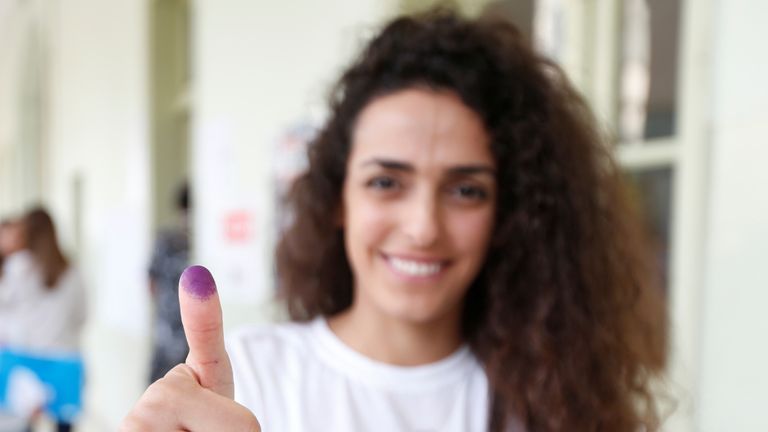
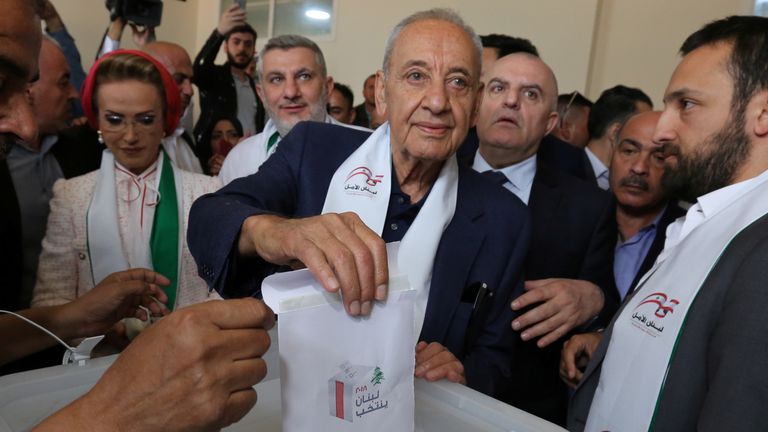
Voters in Lebanon have turned out for the country's first general election since 2009.
As voters flocked to polling stations across the country, vehicles and clothing were decorated with material promoting the main parties and speakers played songs supporting candidates.

Due to changes in Lebanon's election laws and instability in neighbouring Syria, its people have not elected a new parliament for almost a decade.
Predicting the winner in this poll has proved difficult, as the number of voting districts has been reduced and the country now uses a proportional representation electoral system.
However, most analysts believe there will be no outright winner and Lebanon's major parties will form a coalition government.

Lebanon has one of the highest debt-to-GDP ratios in the world, and has been warned by the International Monetary Fund that it faces financial collapse if the issue is not addressed.
Lebanese voters aren't registered based on where they live, but in the district their ancestors came from, prompting much travel out from the capital Beirut.

There are 583 candidates competing for 128 parliamentary seats, evenly split by law between Christian and Muslim candidates.
Following the conclusion of a 15-year civil war in 1989, the Taif Accord requires that Lebanon's president is a Maronite Christian, its prime minister a Sunni Muslim, and parliament's speaker a Shia Muslim.
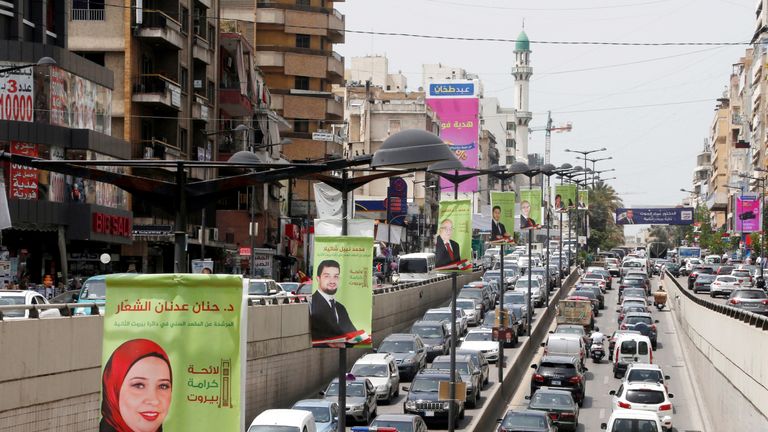
Election analysts are closely watching how Prime Minister Saad Hariri fares, while the performance of Shia Islamist group Hezbollah, backed by Iran's clerical regime, is also under focus.
Lebanon has often been a battleground for influence between Saudi Arabia and Iran.
Saudi Arabia's continued interest in Sunni Lebanon was brought into question after Prime Minister Hariri made a surprise resignation during a visit to the country last year, before withdrawing the resignation days later.
At the time, Mr Hariri said he resigned to save his country from imminent danger, although it has not been disclosed what this danger was.
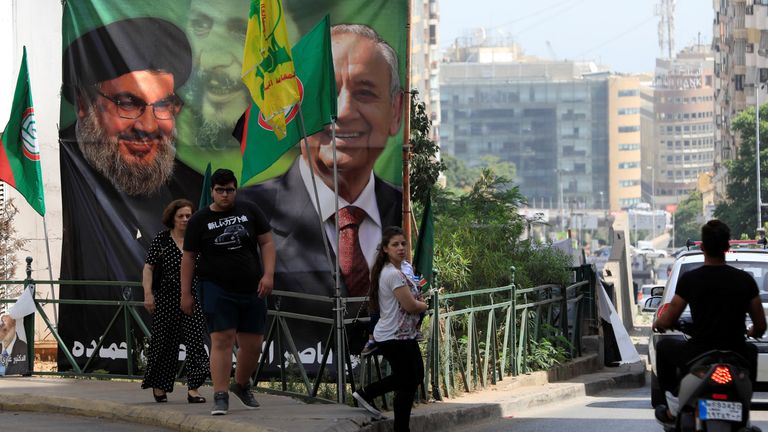
Syria's civil war has seen the arrival of over a million refugees into Lebanon, straining the state's resources and leaving rival groups in parliament unable to agree on a president between 2014-16.
Repeatedly delayed elections as the Lebanese parliament worked on the proportional representation law drew international concern, although the new rules are not expected to substantially undermine the political elite in the country.